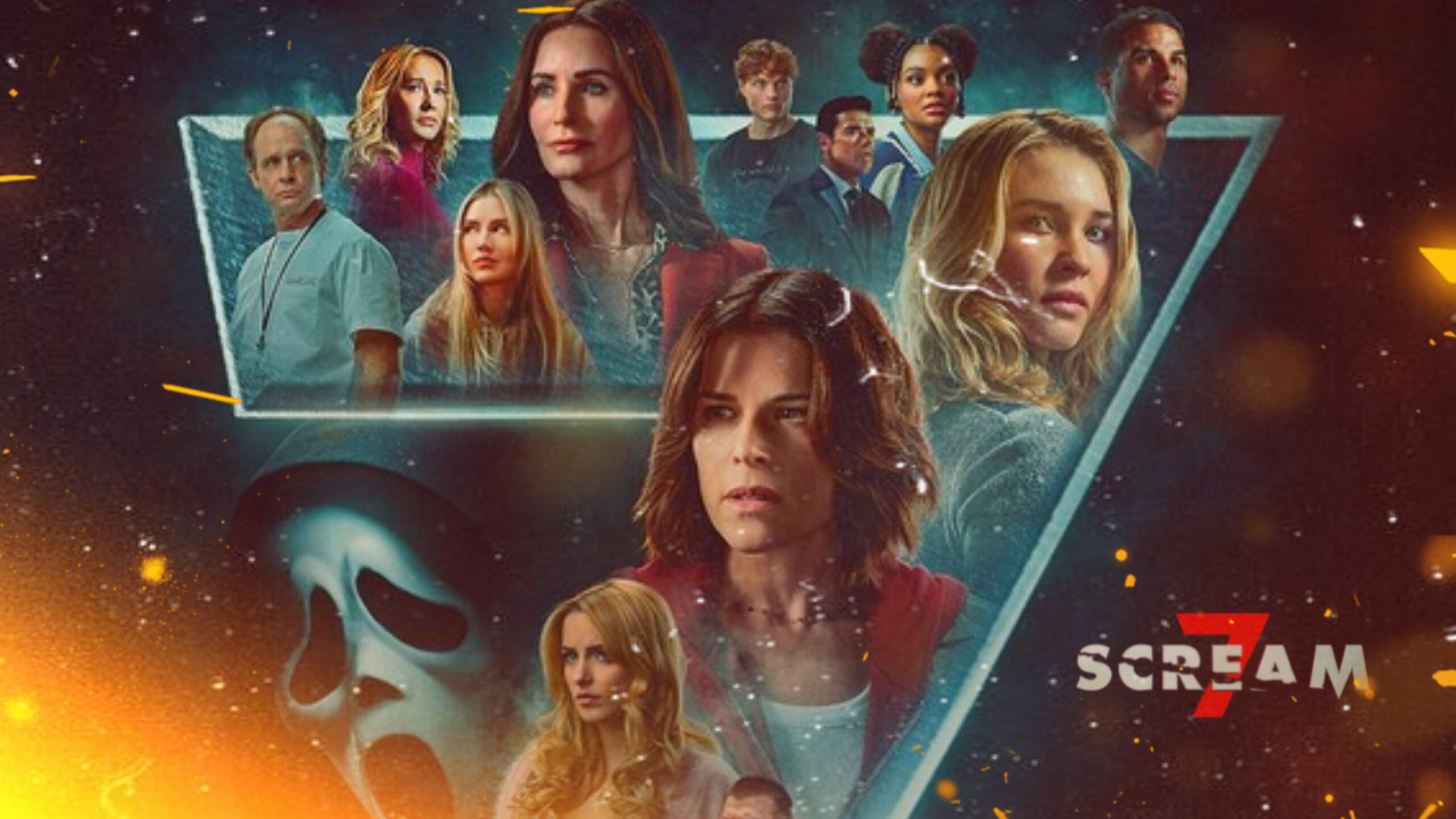
The franchise that redefined 90s horror has returned, though not with the glory once anticipated. Directed by Kevin Williamson—the original architect of Woodsboro’s nightmares—Scream 7 desperately attempts to find its footing after surviving one of the most chaotic productions in recent Hollywood history. The result, unfortunately, is a fatal misstep.
1. The 1996 Genesis: An Unattainable Standard
To understand the crushing weight under which Scream 7 collapses, one must look back to 1996. Wes Craven and Williamson did more than create a textbook slasher; they conceived a masterful dissection of the genre. The original film grossed $173 million worldwide—a figure that, adjusted for inflation, would exceed $350 million today. It remains not only the highest-grossing entry in the saga but a pillar of horror cinema that few contemporary works have managed to rival.
The true genius of Scream has always resided in its meta-narrative architecture. It all stems from The Woodsboro Murders, Gale Weathers’ sensationalist book that gave way to the fictional Stab franchise. A delightful detail for cinephiles is remembering that, starting with Scream 2, Robert Rodriguez himself is credited as the director of these films within the movie’s universe, elevating this “hall of mirrors” to an unparalleled level of cultural satire. This new installment forgets that very intelligence.

2. Meta-Reality: The Stab Universe
3. The Ghostface Glossary
Thanks to the erudition of Randy Meeks (and later, his niece Mindy), Scream gifted us an essential lexicon for surviving modern fiction:
- The Rules: The unbreakable dogma for surviving a sequel, prequel, or trilogy.
- Legacy Characters: The pillars (Sidney, Gale, Dewey) who anchor the franchise’s history to the blood of the present.
- Requels: The definitive term for films that function as direct sequels while operating under the mechanics of a soft reboot.
4. The Paramount Scandal: The Carpenter Sisters’ Void
The road to the big screen for Scream 7 was paved with controversy. The abrupt departure of Melissa Barrera and Jenna Ortega following the massive success of Scream 5 and 6—a result of political and ideological friction with Paramount—left an irreparable crater in the narrative. What was initially conceived as the grand finale of the Carpenter sisters’ trilogy had to be incinerated and rewritten in a forced march, bringing back the “old guard” as a desperate lifeline.
5. Execution: A Foretold Disaster
While Neve Campbell and Courteney Cox inhabit their characters with the effortless mastery of those who have spent decades outrunning the same knife, the script is an absolute mess. The seams of the rushed rewrites are visible in every line of dialogue. The film attempts to mask its profound lack of cohesive plotting with loud, graphic violence, which ultimately feels hollow and devoid of emotional stakes.
6. The Killer: From Revenge to the “Resentful Baker”
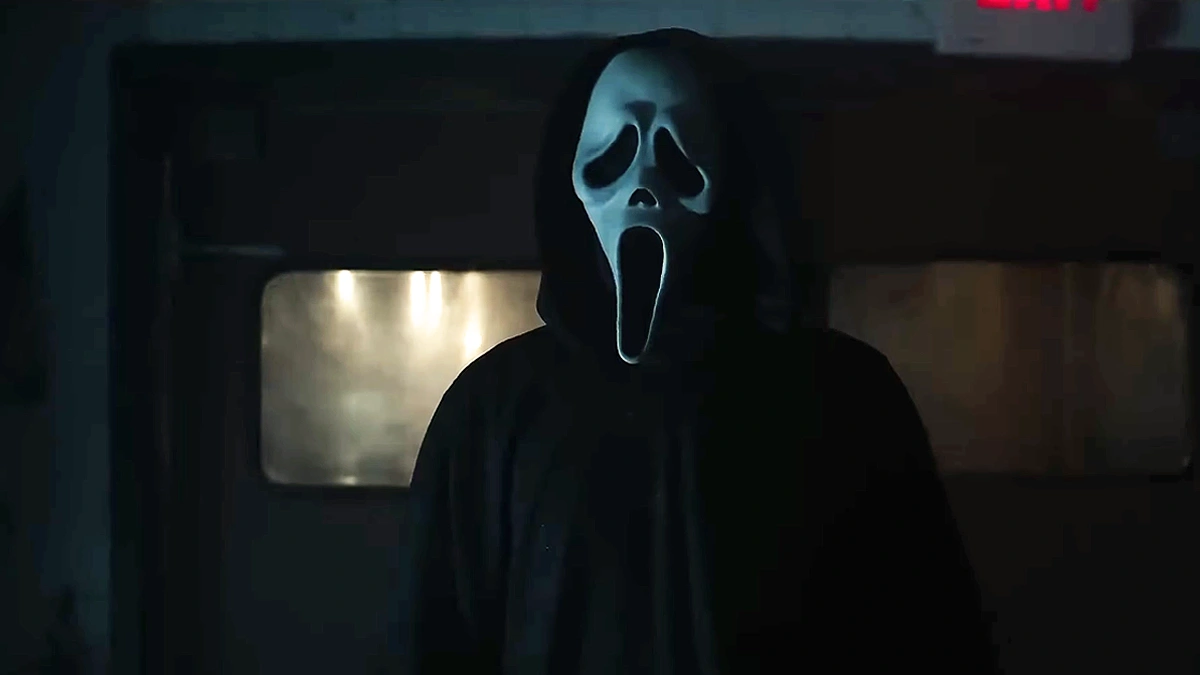
The unforgivable offense of Scream 7 lies in its final reveal. The plot twists, historically the franchise’s specialty, here border on the absurd. We are, without exaggeration, facing the dimmest killers in the series. There is an insurmountable dissonance: the lethal, almost superhuman skill with which Ghostface executes his crimes does not align with the motivational clumsiness of the person behind the mask. If previous installments featured toxic fandom or harrowing family trauma as motives, here the justification is as shallow as a “baker traumatized because no one bought his bread.” Complex characters have been replaced by cheap plot devices.
7. Toxic Nostalgia and AI: Echoing Past Mistakes
Instead of offering something new, the film over-relies on nostalgia, lazily tracing scenes from 1996 without a fresh perspective. Worse yet, it trips over the same stones that buried other horror franchises:
- It mimics the structure of Halloween H20 (the inevitable return of the matured heroine to the fray).
- It repeats the embarrassing mistake of Halloween: Resurrection by implementing a real-time “streamshow,” this time seasoned with Artificial Intelligence. Watching Ghostface interact with predictive algorithms and VR cameras turns the experience into a technological fiasco that felt dated the moment they yelled “Action!”
Scream 7 is, by far, the weakest entry in the franchise. With a frayed story, the least imposing antagonist, and a climax that severely underestimates the audience, the saga seems to have received its final blow—and this time, the hand holding the knife belongs to its own creators.
“Scream 7 proves that sometimes the most terrifying thing isn’t the masked killer, but a rushed script. It devolves from a meta-horror icon into an unintentional parody of itself. We are left with the clumsiest Ghostface in the most forgettable film.”